

Garden Nursery Products
Gold Coast · Est. 1979

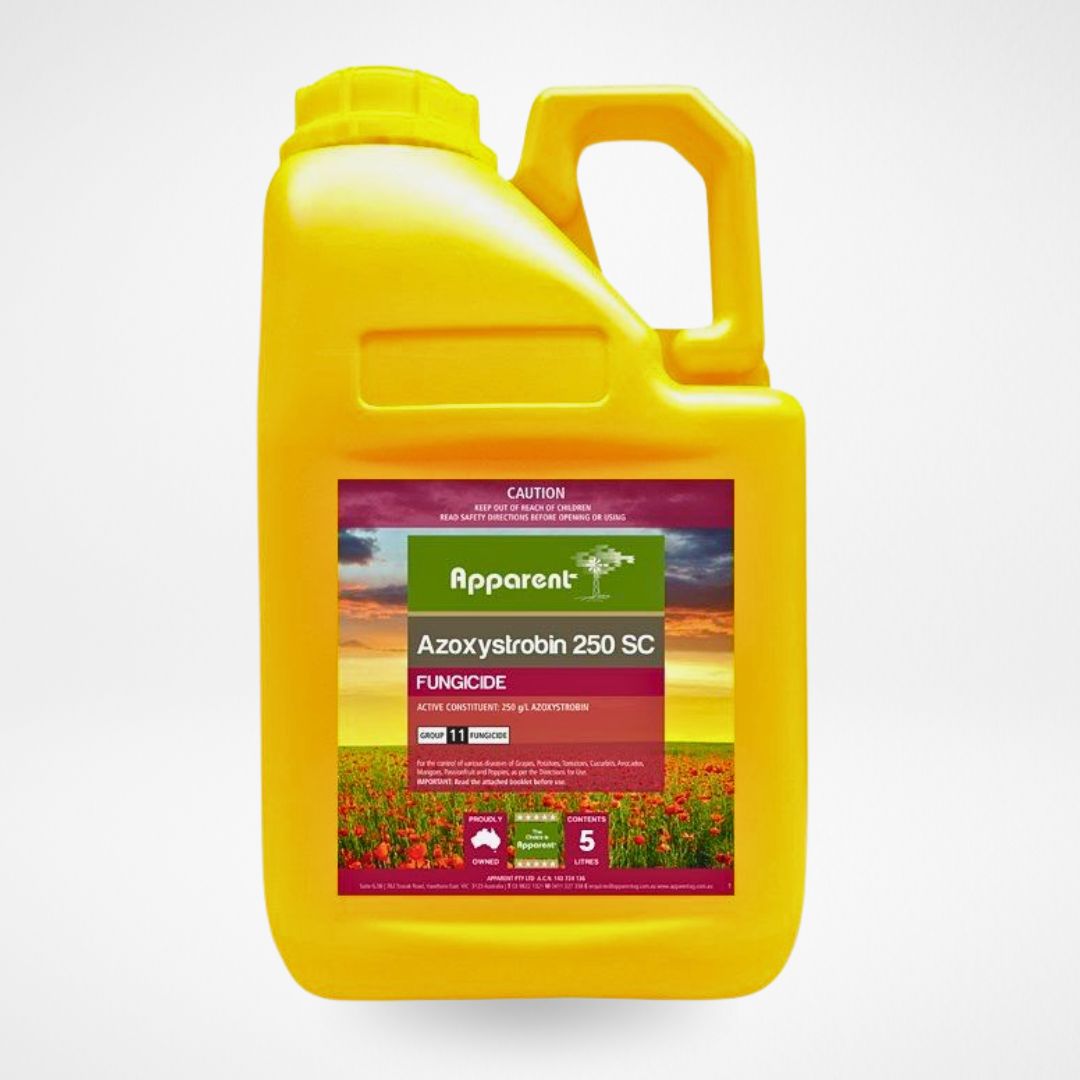
AZOXYSTROBIN 250SC Fungicide 5L- Broad-Spectrum Disease Control for Healthier Plants

Loading...
Pro-Grade Quality
24hr Dispatch
FUNGICIDE · SKU: 900-228

AZOXYSTROBIN 250SC Fungicide 5L- Broad-Spectrum Disease Control for Healthier Plants

★★★★★4.7 (55 Google reviews)·In Stock — Ready to Ship

$148.50 Inc GST

AZOXYSTROBIN 250SC is a 250 g/L azoxystrobin fungicide in a 5L pack. The label lists a range of vegetable, fruit and nut crops, and nursery stock and ornamentals. It does not list lawns or home gardens. Read the label before use.

In stock

Fast DispatchWithin 24hrs Australia-wide
Quality GuaranteedPro-grade formulations
6 kg44 × 31 × 16 cm
Need Advice?07 5537 4585
Active Ingredient250 g/L Azoxystrobin
SKU: 900-228 Category: Brand:

Related Products

Loading...

Product Description

AZOXYSTROBIN 250SC is a fungicide containing 250 g/L azoxystrobin (Caution poison), in a 5L pack. The label lists a range of fruit, nut and vegetable crops, poppies and pyrethrum, and nursery stock and ornamentals. The label does not list lawns or home gardens.

What the label lists. Vegetables: tomatoes (early and late blight, sclerotinia), potatoes (early and late blight, black scurf), cucurbits (powdery and downy mildew, gummy stem blight), lettuce and beans (sclerotinia rot), carrots, brassica vegetables, leeks, onions, garlic, peas and others, each with its own rate. Fruit and nuts: grapes, citrus, avocados, mangoes, olives, passionfruit, almonds, pistachio and rubus berries. Nursery stock and ornamentals: downy mildew, grey mould, leaf spots, powdery mildew and rusts (80 to 120 mL per 100 L of water) and myrtle rust (40 mL per 100 L).

Withholding periods. Do not harvest for 1 day after application on cucurbits, passionfruit, tomatoes and rubus berries; 3 days on mangoes; 7 days on brassica vegetables, leeks, onions, garlic and avocados; 14 days on lettuce and grapes; 21 days on carrots and olives; 4 weeks on almonds and pistachio; and 6 weeks on poppies. A withholding period is not required for beans, peas, potatoes, citrus, nursery stock and ornamentals when used as directed. See the Application Rates tab and read the label before use.

Before you buy. Highly toxic to aquatic life: do not contaminate dams, waterways or drains with the chemical or used containers, and do not spray in conditions that could cause drift onto wetlands, waterbodies or watercourses. When opening the container and preparing the spray, wear cotton overalls buttoned to the neck and wrist and elbow-length chemical resistant gloves. Do not enter treated areas until the spray has dried, unless wearing cotton overalls buttoned to the neck and wrist (or equivalent clothing).

Delivery from $17, priced by weight and postcode at checkout.
Additional information

Weight6 kg
Dimensions44 × 31 × 16 cm
Size

5L

Safety Data Sheets (SDS)

Application Rates

General Application Instructions

Concentration Limits: Do not exceed 4X concentration when using low-volume application equipment, unless applied by air. Ensure all plant surfaces are evenly covered for effective disease control.

For Tree Crops and Vines

  • Dilute Spraying: Use a sprayer designed for high water volumes to ensure the spray runs off the plant. Adjust sprayer settings for even coverage throughout the crop canopy. Add the product as specified in the Directions for Use table for every 100L of water. The water volume and sprayer setup may need adjustments as the crop grows.
  • Concentrate Spraying: Use a sprayer designed for lower water volumes. Calculate the concentrate rate based on the dilute spray volume:
    • Example: If the dilute spray volume is 1000L/ha and you plan to spray 500L/ha, the concentration factor is 2X.
    • If the label rate is 80mL/100L for dilute spraying, use 160mL/100L for concentrate spraying (2 x 80mL). Adjust as the crop grows. Consult industry guidelines or seek expert advice if needed.


Mixing Instructions:

  • Half-fill the spray tank with clean water and start agitation.
  • Shake the fungicide container well.
  • Add the required amount of Apparent Azoxystrobin 250 SC Fungicide while filling the rest of the tank. Add any tank-mix products last.
  • Keep the mix agitated until spraying is finished.


Important: Do not leave the spray mix in the tank overnight.


Tank Mixing and Compatibility:
Compatible with certain products like Ambush*, Bravo*, Captan WG, copper hydroxide, and others listed. Do not mix with multiple products or those not listed without testing, as it may cause damage or reduce effectiveness.

Important: Do not mix with specific products like Lorsban* 500 EC, Nitofol*, or Supracide* for use on tomatoes or grapes, as they may harm the plants.


Important Note on Tank Mixing:

  • Tomato Varieties: Do NOT mix Apparent Azoxystrobin 250 SC Fungicide with the following products, as it may cause damage (phytotoxicity) to certain tomato varieties:
    • Lorsban* 500 EC
    • Nitofol*
    • Supracide*
    • Kelthane* MF
  • Grape Varieties: Do NOT mix Apparent Azoxystrobin 250 SC Fungicide with Lorsban* 500 EC for use in grapes, as it may also cause phytotoxicity.

Tips for use

Crop Protection and Safe Use
Apparent Azoxystrobin 250 SC Fungicide is highly toxic to some apple varieties.

  • Avoid Spray Drift: Do not spray near apple trees or in conditions where the spray might drift. Factors like high wind, certain nozzle settings, or small spray droplets can increase drift risk.
  • Equipment Precautions: Never use equipment previously used for this product to spray apple trees—trace amounts can harm them.


Preventing Crop Damage
Riberries, anise myrtle and lemon myrtle: labels for azoxystrobin 250 SC products say they are not known to be sensitive when used to label directions, but sensitivity has not been fully evaluated: treat a small number of plants first.

Ornamentals and Nursery Stock: labels for azoxystrobin 250 SC products say nursery stock and ornamentals (other than certain apple varieties) are not known to be sensitive when used to label directions, but small-scale testing is advised. Do not apply to apples, crabapples or flowering cherries.


Environmental Protection
Aquatic Risk: Highly toxic to aquatic life. Avoid contaminating dams, waterways, or drains. Do not spray in conditions where the chemical could drift into wetlands or water sources.


Storage and Disposal
Store the product in its original, tightly closed container in a cool, ventilated area, away from sunlight.

Disposal: Triple rinse containers and add rinsing water to the spray tank. Dispose of empty containers through recycling programs or approved waste facilities. If none are available, bury containers at least 500mm deep in a designated pit, away from waterways and tree roots. Never burn containers or leftover product.


Safety Directions

  • Irritant: Avoid contact with eyes. Wash hands thoroughly after use.
  • Protective Gear: When handling or spraying, wear cotton overalls buttoned at the neck and wrists, or equivalent clothing. Wash clothes daily after use.


First Aid
If poisoning occurs, contact a doctor or call the Poisons Information Centre in Australia (131 126).

For more details, refer to the Safety Data Sheet (SDS).

Active Ingredients

250g/L AZOXYSTROBIN

Reviews

There are no reviews yet.

Be the first to review “AZOXYSTROBIN 250SC Fungicide 5L- Broad-Spectrum Disease Control for Healthier Plants”

Your email address will not be published. Required fields are marked *

Frequently asked questions

What is Azoxystrobin 250SC?

Azoxystrobin 250SC is a fungicide containing 250 g/L azoxystrobin (Caution poison). The label lists a range of fruit and vegetable crops, and nursery stock and ornamentals. It does not list lawns or home gardens.

Which vegetables and diseases does the Azoxystrobin 250SC label list?

Vegetables on the label include tomatoes (early and late blight, sclerotinia), potatoes (early and late blight, black scurf), cucurbits (powdery and downy mildew, gummy stem blight), lettuce and beans (sclerotinia rot), carrots, brassicas, leeks, onions, garlic and peas, each with its own rate. For nursery stock and ornamentals it lists downy mildew, grey mould, leaf spots, powdery mildew, rusts and myrtle rust.

What are the withholding periods for Azoxystrobin 250SC?

Do not harvest for 1 day after application on cucurbits, passionfruit, tomatoes and rubus berries; 7 days on brassicas, leeks, onions, garlic and avocados; 14 days on lettuce and grapes; and 21 days on carrots and olives. A withholding period is not required for beans, peas, potatoes, citrus, nursery stock and ornamentals when used as directed. Do not apply by air except on potatoes.

What are the safety warnings for Azoxystrobin 250SC?

The label says it is highly toxic to aquatic life: do not contaminate dams, waterways or drains with the chemical or used containers, and do not spray in conditions that could cause drift onto wetlands, waterbodies or watercourses. When opening the container and preparing the spray, wear cotton overalls buttoned to the neck and wrist and elbow-length chemical resistant gloves. Do not enter treated areas until the spray has dried, unless wearing cotton overalls buttoned to the neck and wrist (or equivalent clothing).

EXCLUSIVE SAVINGS

Get 5% Off WHEN YOU JOIN OUR NEWSLETTER

Get deals sent straight to your inbox