Garden Nursery Products
Gold Coast · Est. 1979

Sulphate of Potash 25KG

Loading...
Pro-Grade Quality
24hr Dispatch
FERTILISER · SKU: 030-081

Sulphate of Potash 25KG

$76.45 Inc GST

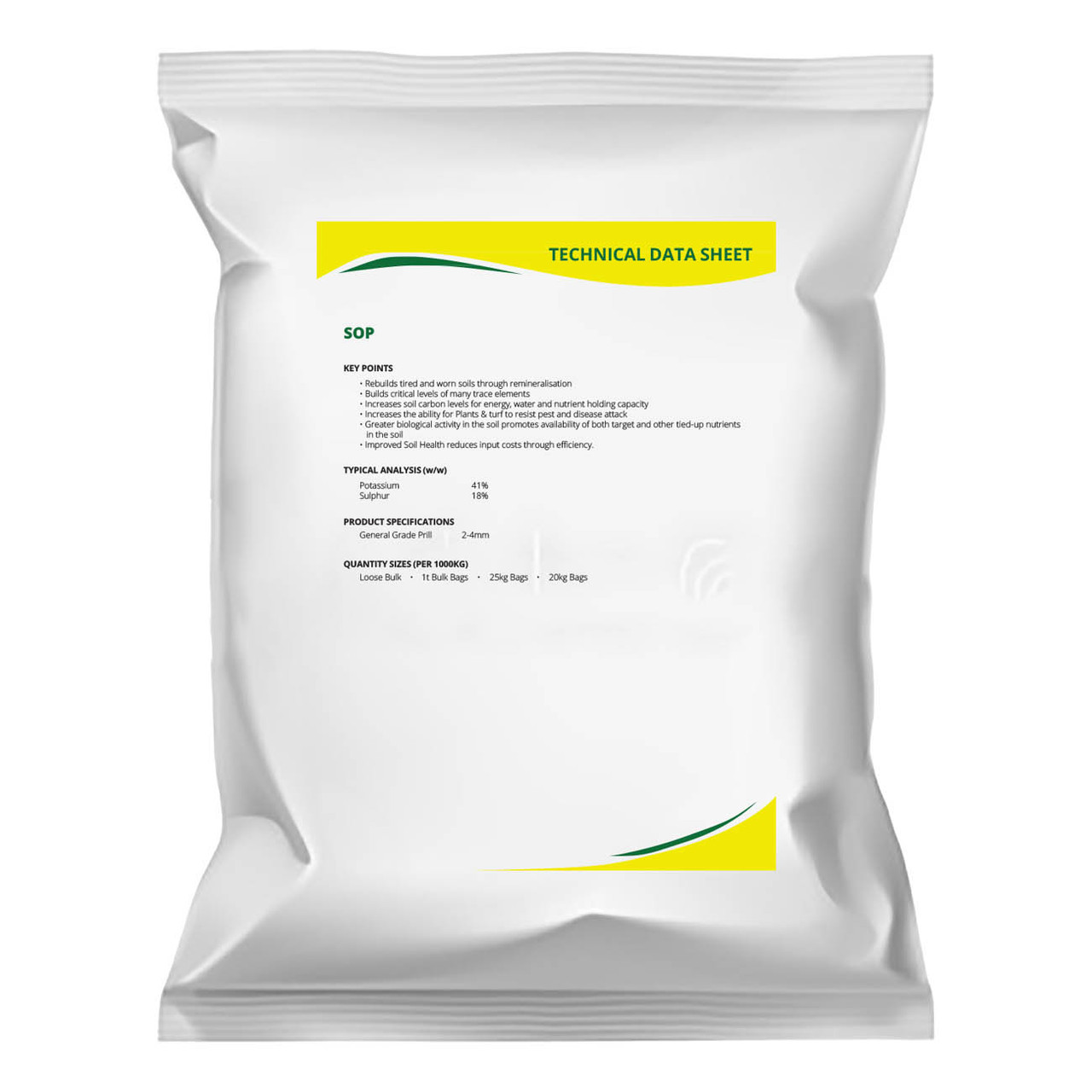
Sulphate of Potash (SOP), 25 kg. Supplier technical data sheet: typical analysis potassium 41% and sulphur 18%, general grade prill 2 to 4 mm.

Out of stock

Fast DispatchWithin 24hrs Australia-wide
Quality GuaranteedPro-grade formulations
Need Advice?07 5537 4585
SKU: 030-081 Category: Brand:

Related Products

Loading...

Product Description

Sulphate of Potash (SOP) 25 kg. The supplier technical data sheet gives a typical analysis of potassium 41% and sulphur 18%, as a general grade prill of 2 to 4 mm.

What this page can say. The only document we hold for this product is the supplier technical data sheet, which gives the analysis and prill size above. Check the pack for the directions for use.

Before you buy. Read the full directions and safety statements printed on the pack before use. Keep out of reach of children.

Delivery from $17, priced by weight and postcode at checkout.

Additional information

Size

25KG

Safety Data Sheet (SDS)

Application Rates

The typical application rate for sulphate of potash (SOP) is around 1 lb per 100 square feet or 200-500 lbs per acre depending on the specific crop and soil analysis, with the key point being to always consult a soil test for the most accurate application rate for your situation; most SOP comes in a 0-0-50 analysis, meaning it is a high concentration of potassium with no nitrogen or phosphorus.

Key points about sulphate of potash application:

Soil test is crucial:
Always perform a soil test before applying any fertilizer to determine the exact amount of potassium needed for your crop.

Lower salt index:
Compared to other potassium fertilizers like muriate of potash, SOP has a lower salt index, making it suitable for sensitive plants.

Application methods:
Can be applied as a granular fertilizer broadcast over the soil or as a liquid solution via foliar spray.

Crop specific rates:
Depending on the crop, the application rate can vary. For example, fruits and vegetables often require higher rates of SOP compared to some field crops.

Tips for Use

When using sulphate of potash (also called potassium sulfate), apply it as a top dressing around the base of plants, either before planting or during the growing season, ensuring to rake it lightly into the soil; avoid getting it on the leaves, and water thoroughly after application; use it particularly for fruit and flower production, as it helps with strong stems and quality blooms; always follow the recommended application rate on the packaging and consider soil testing to determine the necessary amount.

Key points for using sulphate of potash:

Application methods:
Can be applied as a dry powder sprinkled around the base of plants, or as a liquid feed by dissolving in water and applying with a watering can.

Best timing:
Apply before flowering for flowers and when fruit begins to set for vegetables and fruit trees.

Target plants:
Particularly beneficial for tomatoes, peppers, berries, roses, and other high-yielding fruit and flower plants.

Soil considerations:
Especially useful on soils with low potassium levels or where chloride-free potassium is desired.

Important precautions:
Do not over-apply: Excess potassium can hinder nutrient uptake of other minerals.
Avoid leaf contact: Spraying directly on leaves can cause leaf burn, so apply to the soil around the plant.

Read label instructions: Always follow the specific application rates and safety guidelines on the product packaging.


Reviews

There are no reviews yet.

Be the first to review “Sulphate of Potash 25KG”

Your email address will not be published. Required fields are marked *

Frequently asked questions

What do the three numbers on a fertiliser bag mean?

They are the N-P-K ratio - the percentage by weight of nitrogen (N), phosphorus (P) and potassium (K). Nitrogen drives leaf growth and colour, phosphorus supports roots and establishment, and potassium builds stress and disease tolerance. A blend like 15-4-12 is 15% N, 4% P and 12% K, which suits an established lawn; a higher-phosphorus starter blend suits new turf.

What is the difference between slow-release and fast-release fertiliser?

Fast-release (soluble) fertilisers green the lawn within days but are used up in a few weeks and can burn if over-applied in heat. Slow-release fertilisers feed steadily over 8 to 12 weeks or more, give even growth and are far more forgiving in summer. Many turf managers use slow-release as the base feed and a light liquid feed for a quick colour lift.

How much fertiliser does my lawn need?

Granular turf fertilisers are typically applied at 2.5 to 5 kg per 100 square metres, so a 500 square metre lawn needs roughly 12.5 to 25 kg - about one standard bag per application. Spread it evenly with a spreader and water in straight away. Always follow the rate on the bag, as concentrated blends are applied at lower rates than general-purpose ones.

EXCLUSIVE SAVINGS

Get 5% Off WHEN YOU JOIN OUR NEWSLETTER

Get deals sent straight to your inbox