


Product Description
Rose Boost 1LTR
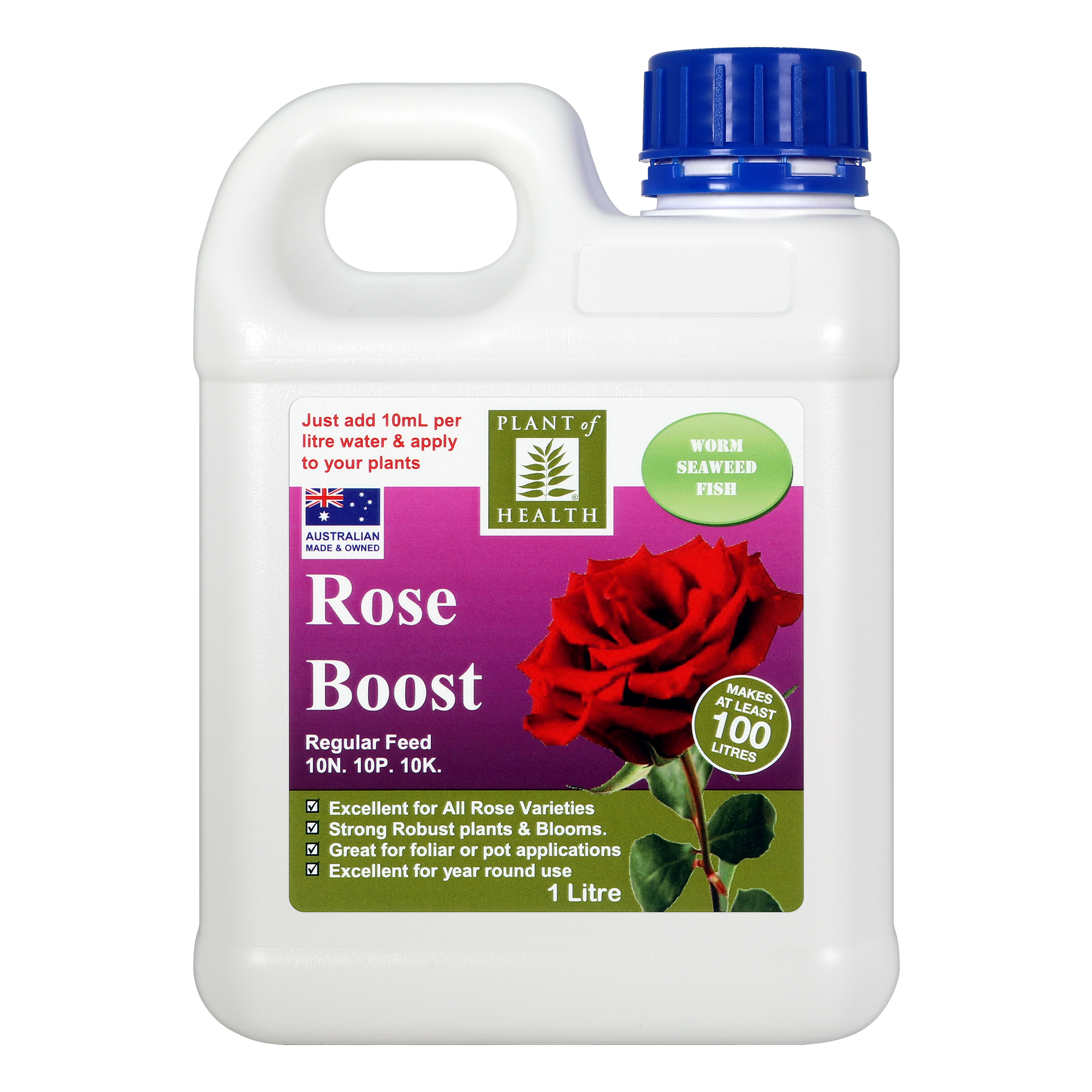
Rose Boost 1LTR
$22.95 Inc GST
Rose Boost 1LTR is a liquid fertiliser concentrate for roses and ornamental plants. It is mixed with water and applied as a soil drench or foliar spray during the growing season. Follow the label for dilution and application directions.
In stock
Rose Boost 1LTR
| Weight | 1.45 kg |
|---|---|
| Dimensions | 32 × 12 × 24 cm |
| Size | 1L |
Shake Before Use: Shake the bottle well to mix the nutrients evenly.
Dilution: Mix the Rose Boost concentrate with water according to the label directions to create the feeding solution.
Feeding Schedule: Apply every two to four weeks during the active growing season from spring to early autumn.
Soil Application: Pour the diluted fertiliser around the base of each rose, keeping it off the leaves.
Foliar Feeding: Spray the diluted mix lightly over the leaves in the early morning or late afternoon.
New or Stressed Plants: Use a weaker dilution if roses are newly planted or showing stress.
Overfeeding Check: Reduce application frequency if leaves begin to brown or curl.
Important: Always read the product label for exact mixing directions, safety advice and first aid instructions. Use only as directed.
Do not apply to roses that are heavily stressed from heat, drought, poor nutrition or recent transplanting.
Avoid feeding during extremely hot conditions.
Do not apply if rain is expected shortly after application.
Avoid foliar spraying in the middle of the day to reduce the chance of leaf burn.
Use a weaker dilution for young or newly planted roses.
Fill your watering can, spray bottle or tank halfway with clean water.
Add the measured amount of Rose Boost concentrate according to the dilution instructions on the label.
Top up with water and shake or stir well to ensure even mixing.
Prepare the diluted mix as directed.
Pour evenly around the base of each rose, keeping the solution off the foliage.
Prepare the diluted solution in a spray bottle or tank.
Spray lightly over the foliage in the early morning or late afternoon.
If Rose Boost is being mixed with other garden liquids, follow this general order for adding products:
Dry materials first
Suspension concentrates next
Water soluble liquids next
Emulsifiable liquids last
Add any oils or wetting agents only after all other components have been mixed thoroughly.
Always check compatibility before combining products.
If using a wetting agent, only add the amount specified on the label of that product.
Do not exceed recommended rates.
Oils or surfactants should be added last and mixed well before applying.
Rose Boost 1LTR does not contain a single chemical active ingredient. It is presented as a liquid fertiliser made from a blend of nutrients and plant based extracts. Always check the product label for full nutrient analysis.
It’s a balanced 10-10-10 liquid fertiliser, mixed at 10mL per litre of water.
Every two to four weeks during the active growing season, from spring to early autumn. Reduce frequency if leaves begin to brown or curl.
Use a weaker dilution for young or newly planted roses. Avoid applying to roses that are heavily stressed from heat, drought, poor nutrition or recent transplanting.
Both work — pour the diluted fertiliser around the base of each rose for a soil drench, keeping it off the leaves, or spray it lightly over the leaves in early morning or late afternoon for foliar feeding.
Avoid feeding during extremely hot conditions, don’t apply if rain is expected shortly after, and avoid foliar spraying in the middle of the day to reduce the chance of leaf burn.
Four things cover most home lawns: a fertiliser matched to the season, a selective herbicide for broadleaf weeds, a lawn-grub (armyworm) treatment for late summer, and a wetting agent to keep water penetrating in the dry months. A seaweed or liquid tonic is a useful extra for stress recovery and root health.
In Queensland lawns, lawn grub usually means lawn armyworm - caterpillars that feed on the leaf at night and can brown out a lawn within days in late summer. They are controlled with a registered turf insecticide such as a bifenthrin spray or a longer-lasting granule; treat at the first sign of damage and again if activity continues. Curl grub is a different pest - the C-shaped beetle larvae that chew roots.
Sandy and sandy-loam soils become water-repellent (hydrophobic) when they dry out, so irrigation and rain run off or pool instead of soaking in. A soil wetting agent breaks that repellency and lets water carry down to the root zone. It is most useful heading into summer and on new or sand-based lawns.
Added to cart
Check out our shop to see what's available
Get 5% Off WHEN YOU JOIN OUR NEWSLETTER
Get deals sent straight to your inbox



Reviews
There are no reviews yet.